




Enterprises are increasingly adopting advanced technologies to drive efficiency, scalability, and innovation in urban and industrial environments. Edge Computing, combined with Artificial Intelligence, is transforming how data is processed and utilized in real time. This shift is particularly significant for smart cities and industrial automation, where speed, accuracy, and responsiveness are critical. Organizations across sectors such as telecommunications, manufacturing, and infrastructure are leveraging these technologies to enhance operations and deliver better services. Therefore, enterprises must invest in corporate training and workforce upskilling to build capabilities that support next-generation digital ecosystems.
Accelerating Smart Cities with Edge Enabled Intelligence
Edge Computing enables Smart Cities to process data closer to the source, improving efficiency and responsiveness.
Edge Computing allows data to be processed at or near the source rather than relying solely on centralized cloud systems. According to Edge computing, this approach reduces latency and enhances real time analytics. As a result, smart cities can deliver faster and more reliable services to citizens.
Urban infrastructure generates massive volumes of data through IoT devices, sensors, and connected systems. Processing this data at the edge ensures immediate insights and quicker decision-making. Moreover, organizations leveraging workforce transformation consulting can align technology adoption with enterprise strategy. This approach enables efficient deployment of intelligent systems while ensuring workforce readiness.
In addition, edge enabled systems support critical applications such as traffic management, energy optimization, and public safety. These capabilities enhance operational efficiency and improve the quality of urban services. Consequently, enterprises and governments can build scalable and sustainable smart city ecosystems.
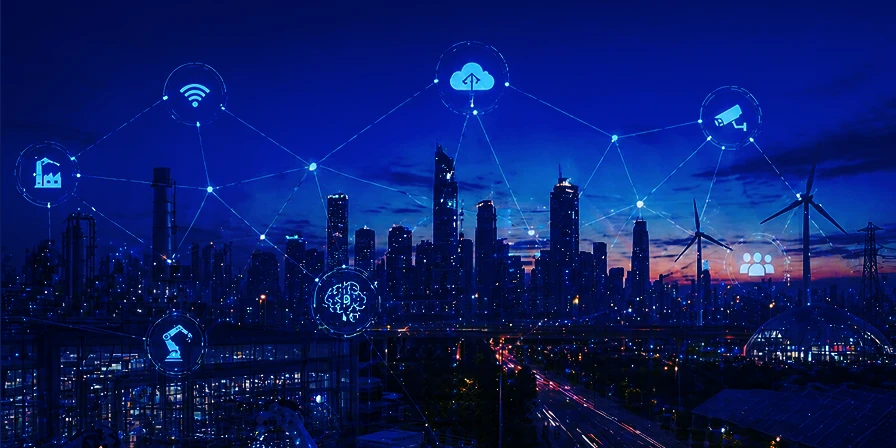
Enhancing Urban Operations with Intelligent Edge Systems
Artificial Intelligence at the edge enhances Smart Cities by enabling real time decision-making and automation.
Artificial Intelligence plays a crucial role in analyzing data generated by edge devices. By combining AI with edge computing, enterprises can process information instantly and derive actionable insights. This capability is essential for managing complex urban environments where delays can impact service delivery.
Furthermore, AI-powered systems enable predictive analytics for infrastructure maintenance and resource allocation. This approach reduces downtime and improves efficiency across city operations. Enterprises that invest in AI skills and corporate training can effectively implement these solutions at scale.
Key use cases in smart cities include:
- Real time traffic monitoring and congestion management
- Smart energy grids for efficient power distribution
- Public safety systems with AI-driven surveillance
- Waste management optimization using IoT sensors
- Environmental monitoring for sustainability initiatives
Additionally, enterprises adopting AI capability development programs can strengthen their ability to deploy intelligent solutions. These programs support talent transformation and ensure consistent implementation across projects.
Driving Industrial Automation with Edge AI
Industrial automation is undergoing a significant transformation with the integration of edge computing and Artificial Intelligence. Manufacturing environments require real time analytics to optimize production processes and reduce downtime. Edge AI enables organizations to process data locally, ensuring faster insights and improved operational efficiency.
Enterprises can leverage edge AI to monitor equipment performance, detect anomalies, and predict maintenance requirements. This proactive approach minimizes disruptions and enhances productivity. In addition, integrating AI with IoT devices enables seamless communication across systems, improving coordination and efficiency.
Moreover, organizations implementing operations engineering training solutions can build the expertise required to manage advanced industrial systems. These programs enable workforce upskilling and support enterprise-wide adoption of automation technologies.
Leveraging 5G and IoT for Real Time Industrial Insights
The combination of 5G and IoT technologies enhances the capabilities of edge computing in industrial environments. High-speed connectivity enables seamless data transmission between devices, while IoT sensors provide continuous data streams. Together, these technologies support real time analytics and improve decision-making.
Enterprises can use these capabilities to optimize supply chains, monitor production lines, and improve quality control. Furthermore, real time insights enable organizations to respond quickly to changing conditions, ensuring operational continuity and efficiency.
In addition, adopting scalable enterprise programs ensures that these technologies are implemented effectively across global operations. This approach enables organizations to maintain consistency while driving innovation.
Building Scalable Edge AI Ecosystems for Enterprises
Scalability is essential for enterprises implementing edge AI solutions across multiple locations. Organizations must design systems that can handle increasing data volumes while maintaining performance and reliability. Edge computing architectures enable distributed processing, ensuring scalability and flexibility.
Enterprises must also prioritize workforce upskilling to support these initiatives. Training programs help employees understand emerging technologies and apply them effectively in real-world scenarios. As a result, organizations can maximize the value of their investments in edge AI and digital transformation.
Explore Edge AI for Smart Enterprises
Learn how edge computing and AI drive smart cities and industrial automation

Conclusion
Edge Computing and Artificial Intelligence are driving significant advancements in smart cities and industrial automation. Enterprises must adopt strategic approaches that combine technology, workforce upskilling, and enterprise programs to achieve sustainable growth. By investing in corporate training and talent transformation, organizations can enhance operational efficiency, enable real time analytics, and build future ready ecosystems. Cognixia continues to support enterprises in building AI-ready organizations at scale through comprehensive training and digital transformation solutions.