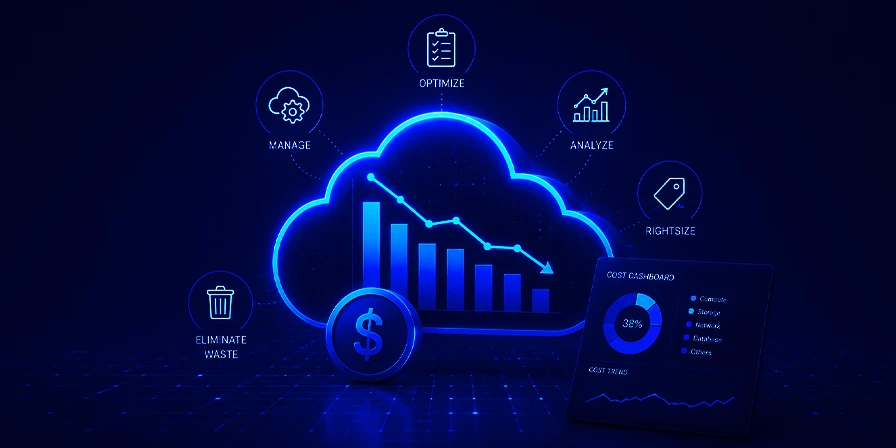
Enterprises are rapidly expanding cloud infrastructure to support digital transformation, scalability, and operational agility. However, uncontrolled cloud consumption often leads to rising operational costs and inefficient resource utilization. Cloud Cost Optimization has become a strategic priority for organizations aiming to balance performance with financial accountability. Enterprises across industries such as BFSI, healthcare, and telecommunications must equip infrastructure teams with the skills required to manage cloud environments efficiently. Therefore, organizations are increasingly investing in corporate training, workforce upskilling, and enterprise programs to improve cloud efficiency and long-term operational sustainability.
Strengthening Enterprise Infrastructure Through Cloud Financial Management
Cloud Cost Optimization helps enterprises align cloud investments with operational efficiency and business goals.
Cloud Computing provides enterprises with scalability, flexibility, and faster deployment capabilities. According to Cloud computing, organizations can access computing resources on demand without maintaining physical infrastructure. However, without proper governance and monitoring, cloud usage can quickly increase operational expenses.
Enterprises must establish structured financial management practices to improve visibility into cloud spending. This requires collaboration between infrastructure teams, finance departments, and operational leaders. Moreover, organizations leveraging workforce transformation consulting can align cloud strategies with enterprise objectives. As a result, businesses can reduce waste, improve resource allocation, and strengthen cost accountability across teams.
In addition, cloud financial management enables organizations to optimize infrastructure investments while maintaining service performance. Enterprises that prioritize cloud efficiency can achieve better scalability and support long-term growth initiatives.
Developing Cloud Cost Management Skills Across Infrastructure Teams
Cloud Cost Optimization skills are essential for enterprise teams managing complex cloud environments.
Modern infrastructure teams require specialized knowledge to manage cloud resources effectively. Enterprises operating across AWS and Azure environments must ensure that teams understand usage patterns, pricing models, and optimization strategies. Therefore, organizations must invest in cloud training programs that focus on both technical and financial management capabilities.
Furthermore, enterprises adopting structured workforce upskilling initiatives can improve collaboration between engineering and finance teams. This approach supports FinOps practices that enable data-driven decision-making and cost transparency. In addition, organizations that integrate cloud efficiency into enterprise strategy can optimize workloads without impacting operational performance.
Key cloud cost management skills include:
- Analyzing cloud usage and identifying cost drivers
- Implementing resource rightsizing strategies
- Managing AWS and Azure spending effectively
- Using automation for dynamic workload scaling
- Monitoring performance through cloud efficiency tools
Additionally, enterprises implementing cloud operations learning programs can strengthen workforce capabilities and improve infrastructure management outcomes. These programs support talent transformation while enabling consistent cloud governance practices.
Improving AWS and Azure Cost Visibility
Visibility into cloud spending is essential for effective optimization. Enterprises using AWS and Azure platforms must continuously monitor resource utilization and operational expenses. Advanced reporting and analytics tools help infrastructure teams identify inefficiencies and optimize workloads more effectively.
However, visibility alone does not ensure success. Teams must also understand how to interpret data and apply optimization strategies. Therefore, enterprises must invest in corporate training initiatives that enhance analytical and operational skills across infrastructure teams.
Moreover, Azure Cost Management and AWS optimization tools enable organizations to track spending trends and forecast future costs. This proactive approach improves budgeting accuracy and supports better financial planning across enterprise environments.
Implementing FinOps Practices for Enterprise Efficiency
FinOps has emerged as a critical operational model for enterprises managing large-scale cloud environments. It promotes collaboration between finance, operations, and engineering teams to improve cloud cost accountability and efficiency. Enterprises adopting FinOps frameworks can optimize spending while maintaining agility and innovation.
In addition, organizations implementing enterprise workforce development initiatives can ensure that teams understand FinOps principles and governance frameworks. This approach enables enterprises to establish consistent optimization practices across departments and regions.
Furthermore, FinOps supports continuous optimization by encouraging regular reviews of cloud usage, workload performance, and operational efficiency. Consequently, organizations can achieve better control over infrastructure costs and maximize cloud investment value.
Building a Culture of Continuous Cloud Optimization
Sustaining cloud efficiency requires continuous monitoring, governance, and workforce development. Enterprises must regularly evaluate cloud usage patterns and adapt optimization strategies based on changing business requirements. This approach ensures long-term operational sustainability and scalability.
Continuous learning also plays a critical role in cloud optimization success. Infrastructure teams must stay updated with evolving cloud technologies, pricing models, and operational best practices. As a result, enterprises can maintain high performance while controlling cloud expenses effectively.
Optimize Enterprise Cloud Costs with Confidence
Learn how infrastructure teams improve cloud efficiency and reduce operational expenses

Conclusion
Cloud Cost Optimization is essential for enterprises managing large-scale cloud infrastructure. Organizations must combine workforce upskilling, cloud governance, and FinOps practices to improve efficiency and reduce operational costs. By investing in corporate training and enterprise programs, businesses can strengthen cloud management capabilities and support sustainable digital transformation. Cognixia continues to help organizations build AI-ready enterprises at scale through comprehensive cloud and workforce transformation solutions.